
In today’s fast-paced and ever-changing business landscape, organizational development (OD) is critical for a company’s success and sustainability. Effective OD strategies are essential to adapt to emerging trends, technologies, and market dynamics. In this article, we will explore the best strategies that can ensure effective and efficient organizational development in the modern era. In the digital age, data is king. Successful organizational development starts with a robust data analysis strategy. Organizations should collect, analyze, and leverage data to make informed decisions. With the help of advanced analytics and AI, companies can gain insights into employee performance, customer behavior, and market trends, allowing them to adapt and evolve more effectively.
In the modern era, leadership needs to be agile and adaptive. Leaders must be open to change and possess the ability to lead through uncertainty. Agile leadership promotes innovation and the quick implementation of new strategies to stay competitive in rapidly evolving industries. Organizations should place employees at the center of their development strategies. A motivated and engaged workforce is more likely to contribute positively to organizational growth. Invest in employee development, well-being, and create a positive work culture to foster commitment and innovation.
The integration of technology is crucial for organizational development. Leveraging digital tools and platforms, like project management software, communication apps, and customer relationship management systems, can streamline operations, improve collaboration, and enhance customer service. In the modern era, the pace of change is relentless. To stay relevant, organizations and employees must commit to continuous learning and skill development. Companies should provide training and development programs that help employees acquire new skills and adapt to evolving industry requirements.
Collaboration is key to organizational development. Building strategic partnerships with other organizations, suppliers, and customers can create new opportunities for growth, knowledge sharing, and resource pooling. It can also enhance your market presence and reduce risks associated with change. Diversity and inclusion are more than just buzzwords; they are fundamental to organizational development. Diverse teams bring unique perspectives and experiences, fostering creativity and innovation. Inclusive environments promote equality and belonging, which can drive productivity and employee satisfaction.
Effective change management is essential when implementing new strategies or transforming the organization. Develop a robust change management plan that includes clear communication, training, and support systems to ease the transition and reduce resistance. Organizations that prioritize their customers are more likely to thrive in today’s competitive marketplace. A customer-centric approach involves understanding customer needs, collecting feedback, and adapting products and services accordingly. This ensures long-term customer loyalty and business success.
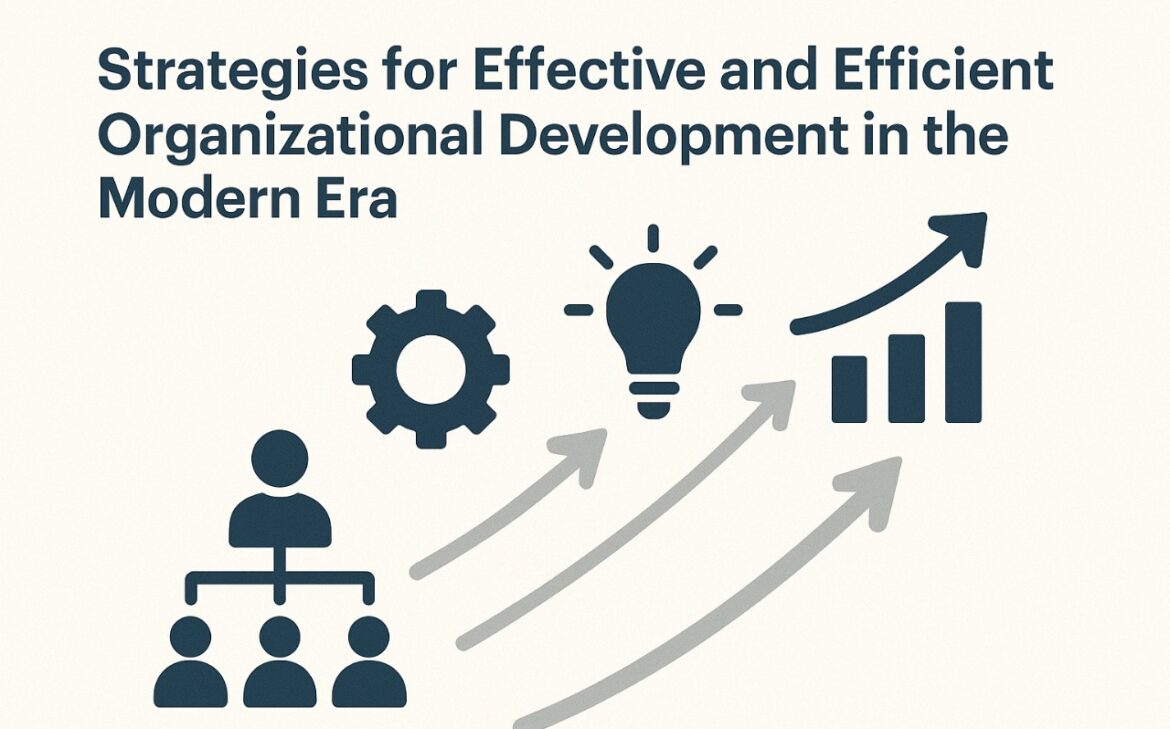
Effective and efficient organizational development in today’s era requires a multifaceted approach that adapts to the rapidly changing business landscape. These strategies encompass data-driven decision making, agile leadership, employee-centric approaches, technology integration, continuous learning, strategic partnerships, diversity and inclusion, change management, customer-centricity, and sustainability.
By adopting these strategies, organizations can position themselves for growth, innovation, and resilience, ensuring they remain competitive and successful in the modern business world. Those that prioritize organizational development are better equipped to navigate the challenges and opportunities that lie ahead.